Album
Three Inverted Nines
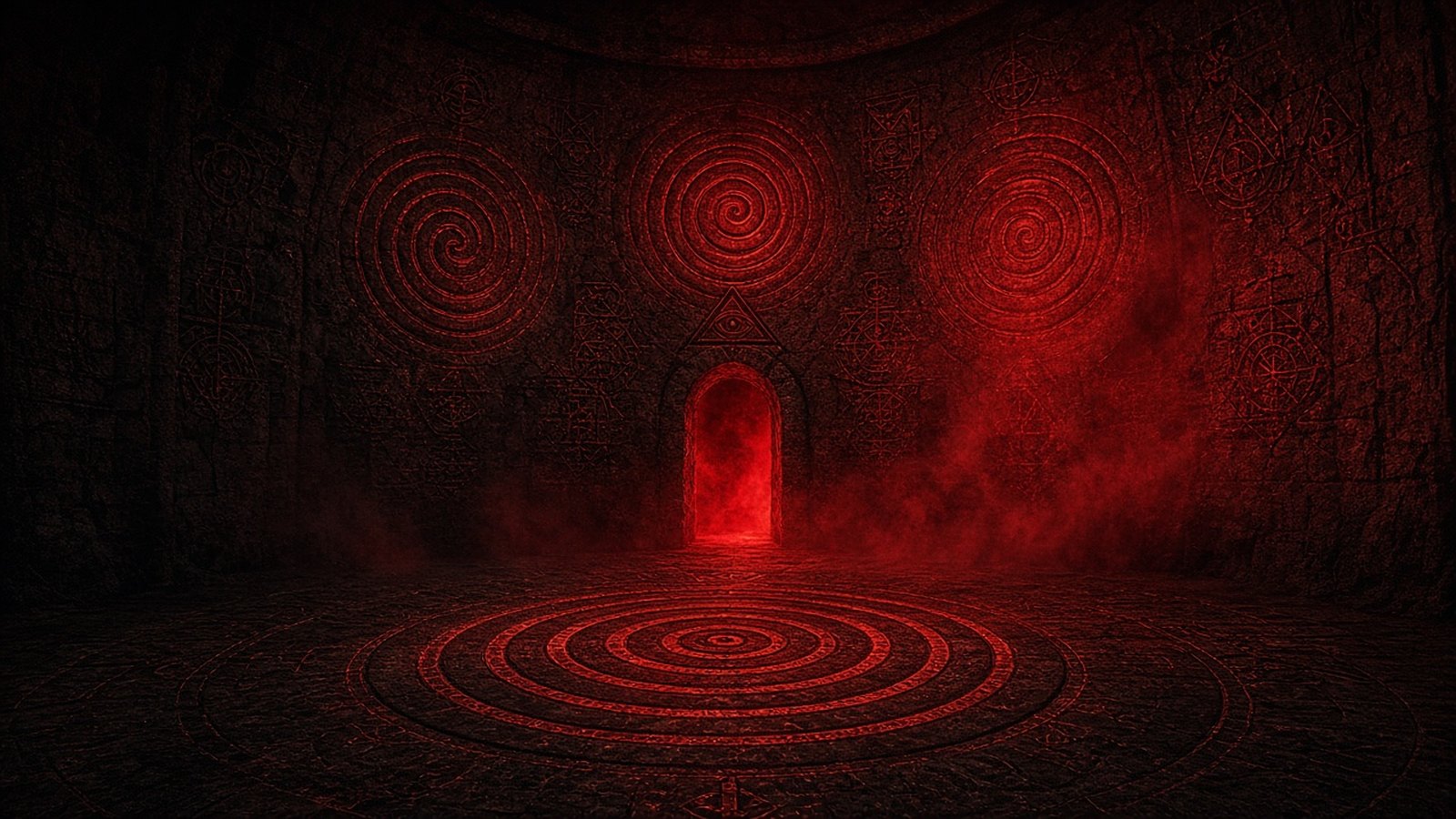
A doorway can have the weight of a whole record. Three Inverted Nines is a twenty-track album in the catalogue and a threshold in the story: the passage between the Crossroads opening and the five-card Tarot cycle. The Oath has been made. Do Not Resuscitate has confronted what cannot be restored. Now the symbols turn inward, carrying the listener towards the mind under siege.
Nine, inversion, repetition, cycles and transformation provide the album's established language. They are not an invitation to manufacture a numerical history. The meaning belongs to LOSTAT66's own mythology, where marks acquire weight through the journey they share. A symbol is not a complete answer merely because it keeps returning. Repetition can reveal a pattern, and it can also become the means by which someone remains inside it.
Across the record, the builder's vocabulary grows dense: rough stone, tools, floor, star, veil, lights, carpet, grip, degree and offering. These titles belong to a personal symbolic architecture, not a documentary claim about real-world ritual practice. The album asks the listener to enter that language without mistaking the appearance of order for proof that a life has become habitable.
The Rough Ashlar lyric makes the tension direct. A stone is handed over to be shaped, yet each blow seems to deepen the fracture. The narrator sees other stones rise cleanly into place while his own remains rejected. Five Points of Fellowship brings another promise under pressure: contact and belonging become absence when the people who should hold the falling person are no longer felt there. The language of construction and the language of fellowship both fail to guarantee that the person within them is supported.
That makes Three Inverted Nines distinct from the Tarot albums it opens towards. It is not yet one card's concentrated confrontation. It is the corridor where the recurring vocabulary gathers, turns and begins to lose its innocent meanings. A light may be named without delivering illumination. A grip may suggest support without resolving whether it holds or restrains. A lodge may appear as a place of belonging while the self within it grows harder to locate.
The title's inversion keeps those contradictions active. Transformation cannot be treated as the automatic result of entering the right room or learning the right words. The person can perform the shape of becoming while still feeling unfinished, unrecognised or bound. That unease prepares the first Tarot card, where the building will draw close enough to become skin and the judgment will turn inward.
Nine of Swords waits beyond this doorway. The whole larger story does not begin there; its origin remains at the Crossroads. Three Inverted Nines brings that origin's promises into a symbolic world detailed enough to expose their cost. The Temple remains under construction, and the listener is about to discover how much of the building has already taken place inside the person who thought he was only approaching its doors.
Meaning
Lost Word
A word can be sought as though finding it would restore the whole structure around it. Lost Word opens this doorway album within LOSTAT66's established language of silence, naming and the things that remain difficult to say. The title carries absence rather than a solution. Something central is missing, and the act of searching already shapes the person who wants to speak it.
At this point in the journey, the Crossroads promise has begun to gather an architecture. Language matters because the weight needs somewhere to become testimony. But the story repeatedly questions whether the right words alone can make the person whole. Lost Word holds that question at the entrance to twenty tracks of symbols and recurrence. The listener is not given a secret phrase to repeat. The absence is allowed to remain meaningful while the path turns towards the inward rooms where silence will become pressure of its own.
Rough Ashlar
The stone is expected to become perfect, and every blow appears to make it more broken. Rough Ashlar turns the builder's image into a voice of rejected selfhood: tools rust at the narrator's feet, the plan offers no answer, and other stones seem able to rise into an order he cannot enter. The pain is not only being unfinished. It is believing unfinished means unfit to belong.
That distinction echoes through the wider Temple. This lyric speaks from within the rejection, not from the final authority of a structure deciding who deserves a place. The hands keep trying to cut away the failed parts until shaping begins to resemble punishment. As an early track in Three Inverted Nines, the song exposes how an ideal of improvement can become another enclosure. The roughness remains, but so does the person, whose worth cannot honestly be measured by the surface the gavel failed to produce.
Veil Remains
Veil Remains places something between the person and a clear view. In LOSTAT66's public symbolism, awareness is never simply decorative; seeing the self can require surrendering the excuses and protections that made not seeing bearable. This title holds the opposite pressure: the covering persists, and the listener remains at a distance from what might be behind it.
In the corridor between the opening story and the Tarot, that remaining veil matters more than a promised revelation. The album has not certified that entering its symbolic language makes everything understood. Words, marks and structures can become familiar while the person using them remains hidden from himself. The title keeps that incompleteness in view, leaving concealment as something felt rather than a distance safely explained. The Temple remains under construction, and seeing it from the threshold is not yet the same as knowing whether its walls are protecting life or keeping life outside.
Raising Never Found
The title leaves raising as an unfulfilled expectation. Raising Never Found belongs to a journey where the promise of becoming cannot be treated as proof that becoming has happened. Something is sought in the movement upwards, but the certainty imagined at its end remains absent. An entrance has been crossed without guaranteeing an answer on the other side.
A threshold can be crossed while the person crossing remains painfully unsure what within him has begun to change. Within Three Inverted Nines, the unresolved expectation helps prepare Nine of Swords, where the language of resurrection and identity will become strained by exhaustion. The larger story keeps asking what can be built from what remains. Here the title lets the wish for an assured transformation stand without fulfilling it on the narrator's behalf. The person is left with the work, not a declaration that the work has already made him complete.
Blazing Star
A light named inside this dark architecture must be approached without assuming what it promises. Blazing Star brings a luminous title into Three Inverted Nines, where symbols are gathering but their human meaning cannot be taken for granted. In LOSTAT66, a mark is important because of its relation to the journey, not because its brightness automatically makes it a guide.
The track's place in the doorway album allows that contrast to remain active. The listener can look towards an image of light while still carrying the cost of the Crossroads and the uncertainty of what comes next. Light has weight in a world where the person is still learning the difference between being shown a direction and being able to move. Its question belongs to the same unfinished Temple: what does someone follow, and what remains their responsibility even when there is something bright enough to look towards?
Checkered Floor
The floor is where the person has to stand, however elaborate the structure above it becomes. Checkered Floor can be approached through LOSTAT66's language of geometry, repetition and the distance between one state and another. The title offers a patterned ground, but a pattern alone cannot decide what a human life should become upon it.
Within Three Inverted Nines, this is one of the ways the architecture takes shape before the Tarot turns it inward. The listener is brought close to the surface that carries the steps, not only to the destination imagined ahead. Repetition can look like order while the person repeating remains divided. The track's title holds that difference without making a historical lesson from the image. This floor belongs to the project's own symbolic world. It is ground for a passage still being walked, not evidence that the traveller has already reached an integrated or finished self.
East Never Brought the Day
A direction has failed to deliver what its promise suggested. East Never Brought the Day holds the distance between looking for light and feeling it arrive. The absence is close enough to be felt without becoming a place that can be left behind on a map. Its pressure belongs to an expectation left standing after the anticipated change has not come.
In LOSTAT66's established architecture, initiation and awareness cannot be reduced to occupying the right position. A person may face towards something called an answer and still remain in darkness. As part of Three Inverted Nines, this title contributes to the doorway's unease: symbols have begun to organise the journey without ensuring that the person feels held by them. The Tarot ahead will expose that tension more intimately. For now, the promised day remains outside reach, and the listener is asked to notice the weight of the word never without turning that despair into the whole horizon of the story.
Cable Tow
A bond can be felt before it is understood. Cable Tow brings another title of attachment into an album concerned with oaths, thresholds and the changing meanings of what holds a person. LOSTAT66 repeatedly asks whether a structure supports the self or prevents it from moving. That tension runs beneath the promise, tugging at the difference between being held and being unable to leave.
Here, commitment has weight, and the thing experienced as connection can also become a chain. The Crossroads has already made a promise central to the journey. Three Inverted Nines explores the symbolic corridor that promise opens. A tether in such a world cannot automatically be called rescue or captivity. The distinction depends on what it allows the person to become. The title keeps the listener near that unresolved pull while the path moves towards the inward confinement of the first Tarot chamber.
Three Lesser Lights
Three Lesser Lights holds illumination in a title that refuses to make it absolute. Within LOSTAT66's symbolic world, seeing is a difficult act rather than an entitlement conferred by a room. Light may make an outline visible without revealing everything that outline contains. The unfinished self does not become finished merely because more of it can be seen.
Placed within Three Inverted Nines, this title belongs to the gathering language of geometry, recurrence and initiation that prepares the Tarot. Its lights belong to this personal mythology, where a symbol keeps its weight through the life that moves beneath it. The listener is kept close to partial knowledge: enough to notice a wall, perhaps not yet enough to know what has been sealed behind it. The larger Temple will need awareness as well as structure. This title allows awareness to begin without claiming it has already become a complete account of the person.
Five Points of Fellowship
The lyric begins with closeness arranged as a promise that nobody should walk alone. Five Points of Fellowship then turns that promised contact into the felt absence of support. The narrator reaches towards a bond that no longer seems to hold, keeping its old positions while finding empty air where another person should be.
Its grief belongs to a human need for belonging, expressed through the project's ritual imagery rather than offered as evidence of a real-world institution. The title's geometry cannot guarantee care. In Three Inverted Nines, that failure exposes another gap between form and life: a promise of fellowship can remain speakable after the person inside it feels released from every hand. The song does not prove that the narrator deserves abandonment. It records the pain of believing the promise should have held, and the difficulty of remaining upright when its language is still remembered more clearly than its warmth.
Sprig of Acacia
Sprig of Acacia introduces a small, living title into an architecture dense with stone, tools and obligation. Its meaning here is approached within LOSTAT66's public vocabulary of memory, survival and what can remain without claiming an external historical explanation for the symbol. The scale is enough to make the contrast meaningful: not another wall, but something that can be held against the weight of the building.
In the threshold album, the title can keep attention on the difference between preserving a trace and imprisoning a life inside its history. The wider journey will return to graves, former selves and the possibility of remembering without returning. The image can remain beside those questions, small enough to carry while the larger structure still asks how memory should be held. Something can remain significant without being required to keep the person carrying it forever at the point where the significance began.
Master's Carpet
A patterned surface can appear to contain an order the person walking across it cannot yet inhabit. Master's Carpet belongs here to the builder's symbolic language, where plans, measurements and repeated forms do not automatically make a life whole. The title draws attention towards a ground arranged with meaning while leaving open how that meaning is experienced from within.
The patterned ground belongs to a personal mythology, its order still unable to settle every question brought across it. Three Inverted Nines is preparing the inward turn, collecting structures that will later become body, judgment and confinement in Nine of Swords. The important distinction is between an ordered image and an ordered self. A person can know the pattern and still feel lost upon it. The Temple remains unfinished because symbols cannot complete the human work on their own, however carefully the marks have been set before the traveller's feet.
Possession
Possession enters a story already concerned with what belongs to a person and what begins to act as though it owns him. The tension remains close to the self, where familiarity can make a claim feel older than the moment it is recognised. A memory, a pattern or an identity can become so familiar that carrying it starts to feel indistinguishable from being carried by it.
Its place in Three Inverted Nines keeps this question before the Tarot confronts bondage more directly in The Devil. This is not the later Possession Complete, and the title does not justify pretending the two recordings are the same song. It belongs to the doorway's developing vocabulary. The person has promised to transform what happened, yet transformation still has to be separated from continued captivity. To call something one's own is not necessarily to stand free of it, and recognising that ambiguity is part of entering the next chamber honestly.
Hollow Candidate
A candidate stands before something not yet entered, carrying an expectation of becoming. Hollow Candidate places absence inside that expectation. The title belongs to LOSTAT66's threshold language without requiring a literal initiation story: someone can occupy the correct outline while feeling increasingly distant from the self the outline is meant to contain.
Within Three Inverted Nines, that distance prepares the first Tarot card's questions of identity. The journey does not make a person whole simply by naming the next stage. There may be an entrance, a role and a promise while the person remains unsure what within him is being offered to them. The title's hollowness is therefore held as a perspective, not a verdict of worthlessness. The larger Temple exists for people whose absence has become difficult to say. This chamber lets the emptiness be acknowledged before the story can ask what kind of becoming would actually make room for life.
Inverted Degree
An established direction is turned in Inverted Degree. The title belongs closely to this album's explicit concerns with inversion, repetition, cycles and transformation, where progress cannot be assumed from the appearance of movement. A stage can be entered without bringing the traveller closer to an honest relationship with himself. Something can change its position while leaving the old weight in command.
This turning belongs to LOSTAT66's own mythology, where a mark must keep answering to the person who gives it meaning. What matters is the act of turning and the uncertainty it reveals. The Crossroads promise has opened a journey that cannot guarantee an unchanged person at its end. Here the title makes direction itself questionable. The listener is being prepared for a cycle that must be lived from within, where the difference between transformation and another repetition will have to be recognised rather than granted by a symbol alone.
The Grip
To be held can mean being supported. It can also mean being unable to leave. The Grip can be approached through that unresolved distinction, already present in LOSTAT66's oaths, chains and need for belonging. The title does not tell the listener in advance which kind of holding has been found, and the surrounding journey gives reason not to assume they are always easy to separate.
After the promised contact of Five Points of Fellowship, the idea of a grip remains charged with both need and doubt. The need for support remains human, even when the symbols around it have grown difficult to trust or to put down. Within Three Inverted Nines, it keeps the human stakes beneath the ritual vocabulary visible. A hand can be remembered as safety even when its absence or pressure changes what safety means. The Temple will need to hold weight without taking possession of the person who puts it down.
The Lodge
A named place of belonging enters the corridor in The Lodge. Within LOSTAT66's personal mythology, such a place can be read through the tension between structure and the life inside it. Walls may offer order, fellowship and a language of purpose while still failing to make someone feel at home. Entering a room and finding a place are not always the same act.
This title is not treated as proof of actual membership or ritual practice. It belongs to the album's established architecture, which prepares the Tarot's inward use of similar images. Nine of Swords will bring the lodge towards confinement and burial; here, the doorway record allows the place-name to carry its uncertainty before that later chamber is reached. The listener is asked to notice the human question beneath the symbol: what kind of structure can contain a person without requiring him to disappear in order to belong?
The Offering
Something brought to the threshold can be an act of commitment, but what is asked in return cannot simply be assumed harmless. The Offering belongs to LOSTAT66's established altar language: sacrifice, promises and the effort to give suffering a purpose. The altar keeps that question near: what can be given without making another offering of the person who is still trying to live?
Across the larger journey, giving will have to be separated from vanishing. Sacrifice will eventually be asked to mean surrendering what harms the heart, not surrendering the heart itself. This early title does not borrow that later clarity and pretend it is already secure. It keeps the cost near the altar, where the person still has to understand what can be given without losing the possibility of a future. Within Three Inverted Nines, the offering remains part of initiation's weight, not a guarantee that enough has now been paid to make a life whole.
Lost At 66
The name appears inside the doorway album as a title of its own. Lost At 66 can be entered through the public lore: the wound, the threshold and the project's private cipher of initiation, doubling and transformation. The number is not a historical answer waiting to be supplied. It is part of the language through which this world asks the person to face himself.
Here, before the Tarot cycle, the name carries an unresolved location. The traveller has entered the symbolic architecture without necessarily knowing what it will make visible. That position differs from Lost at Sixty-Six on The World, where self-recognition gathers the cards already faced. The recordings must not be treated as interchangeable merely because their titles echo. In this earlier place, being lost remains a threshold rather than a conclusion. The listener stands before a longer descent, not beyond a finished interpretation of what the name can hold.
Malevolent Shrine
A shrine can preserve the thing it is built around so completely that preservation becomes captivity. Malevolent Shrine closes Three Inverted Nines within LOSTAT66's established warning against worshipping pain. The image keeps that warning dark, close to the fear that what has been preserved can learn to demand more than remembrance. What has been honoured may also have been allowed to govern too much of the life.
At the end of the doorway album, this image prepares Nine of Swords' inward enclosure. The listener is about to enter a chamber where the building will feel like skin and the promise will risk consuming the person who kept it. The title does not mean the wider Temple is intended as harm. It exposes why the Temple must be built honestly and remain open to change. A structure raised from suffering needs a purpose beyond preserving suffering, or the person seeking shelter can become another offering to the wound.