Tarot · V
The World
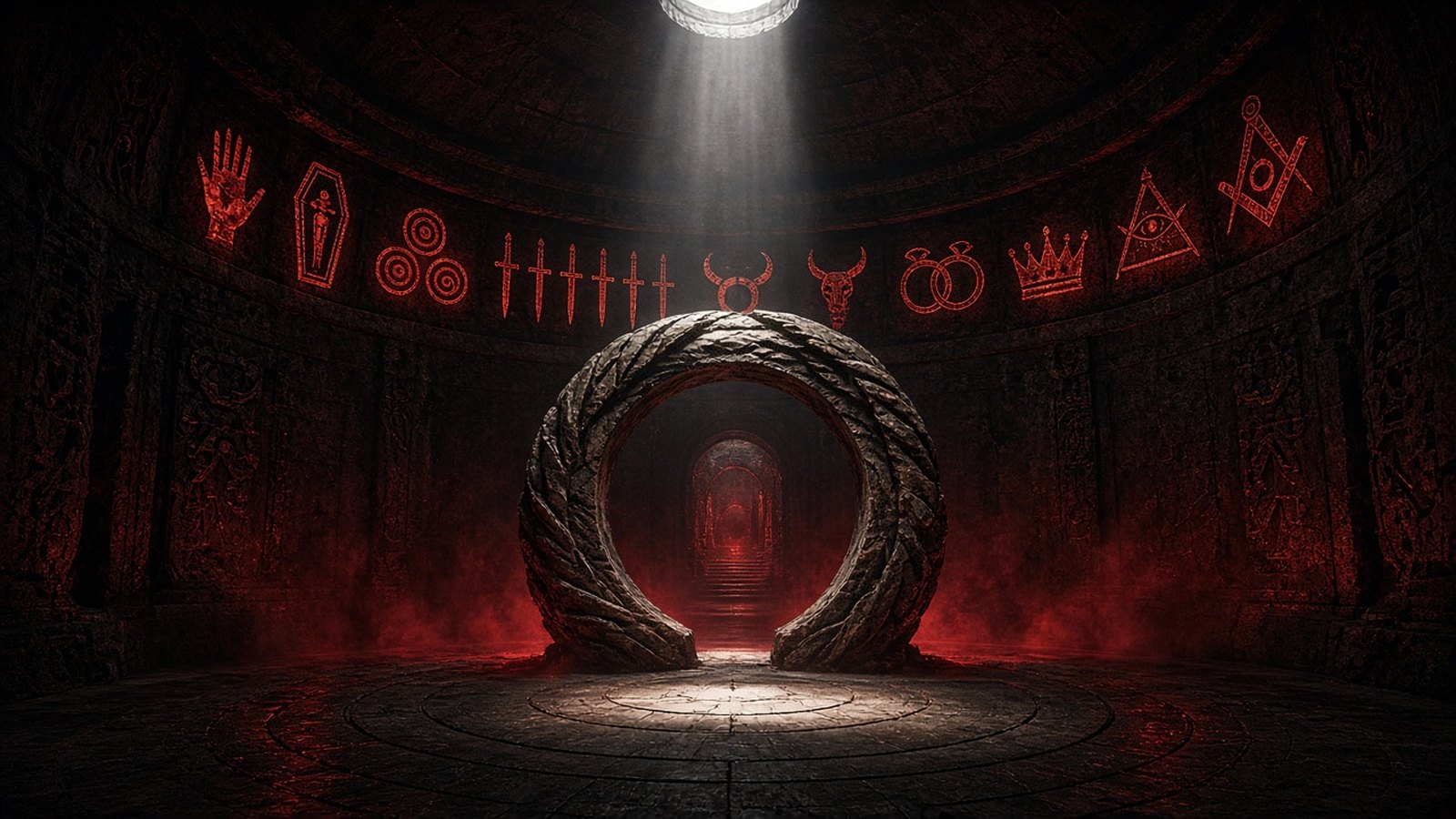
The World keeps turning without asking whether the person inside it feels ready. Morning arrives. Breath continues. The past has not disappeared, yet it no longer has to occupy every possible future. The World, the released fifth Tarot album, closes the cycle by letting its scattered selves belong to one life without surrendering that life to the darkest thing it remembers.
Completion here means integration, not perfection. The journey that turned inward in Nine of Swords, confronted bondage in The Devil, exposed attachment in The Lovers and built responsibility in The Emperor can finally be seen together. The listener is not handed an untouched man. The boy, the wound, the anger, the fear and the person learning to choose remain visible. What changes is their authority over the whole.
The record's distinctness lies in the way its lyrics separate things that earlier rooms could barely tell apart. Remembering is not returning. Mourning is not surrender. Responsibility is not endless punishment. Sacrifice is not the disappearance of the self. Peace is not numbness, and strength does not require every human need to be hidden behind stone. These distinctions do not erase what happened. They create room to live without continually reenacting its cost.
The thirteen-track sequence opens with All My Ghosts, where survival confronts the memories that once claimed to own the narrator. The Boy in the Dark answers the younger self with protection rather than abandonment. What I Could Not Save lets care remain while the impossible duty of saving everything is put down. The Chains Are Gone finds freedom quieter, and more demanding, than the imagined spectacle of a lock breaking.
At the centre, Sacrifice gives up what was killing the heart rather than the heart itself. Every Piece of Me opens the doors to the former selves once treated as obstacles to growth. No More War refuses another lifetime of self-prosecution. The rebuilt man in The Man I Became does not need to return to an imagined state before all damage. He can recognise the person chosen through what followed it.
The World Is Still Turning restores scale without pretending indifference is comfort. The Weight of the Key places freedom in the ordinary work of a boundary held, a truth confessed and a step no one else can take. The title track gathers the cards explicitly, allowing every broken piece to stand within the whole. Lost at Sixty-Six brings self-recognition back towards the name. The bonus Welcome to Anhedonia retains the reality of numbness without undoing the cycle's integration; its place as a bonus is not a claim that the entire journey has simply failed.
The Temple remains unfinished in the lyrics themselves. That is not a contradiction of the album's completion. A cycle can close while a person keeps becoming. Beyond this card, building still has a purpose: not to worship the suffering that supplied the stone, but to make somewhere capable of holding the weight without keeping the living locked inside.
Meaning
All My Ghosts
The ghosts are still here, but their presence is no longer accepted as ownership. All My Ghosts opens The World with the residue of begged-for love, chemical nights, broken promises and the years fed to voices that kept saying the narrator was not enough. The lyric speaks in fragments, making the memories arrive as pressure rather than arranging them into a comfortably distant account.
The turn is survival made audible. Being hurt is separated from being empty; being lost from being beyond a future. The narrator does not announce an exorcism. The ghosts can remain in history, scars and the places already passed through without being allowed to write what comes next. As the first track of the final Tarot card, the song establishes the album's kind of completion: not the removal of every haunting, but the beginning of a different relationship with what still knows the person's name.
The Boy in the Dark
The Boy in the Dark turns towards the younger self who learned to become smaller, read danger in silence and confuse being needed with being loved. The lyric does not ask that boy to prove how much he survived. It returns to him with the recognition the older voice had withheld: he was not the enemy, the burden or the thing that broke.
That act changes the meaning of strength. Becoming a man cannot depend on abandoning the frightened child inside the man. The narrator apologises for that abandonment and refuses to build another altar from the boy's pain. Within The World, the song is a necessary movement towards integration: a former self is not merely tolerated as evidence of damage, but given a place to belong. The protection once demanded from outside becomes a decision to remain. The boy no longer has to carry the whole life alone.
What I Could Not Save
The lyric begins with a burden mistaken for care. What I Could Not Save asks whether setting something down really means it mattered less, then separates love from the impossible duty of making every ending different. People, lost years, broken promises and former selves remain meaningful even when they cannot be carried back to life.
The song refuses both erasure and permanent self-sentencing. Knowing more now does not give the narrator the power to return to every earlier choice and remake it. Compassion must extend towards the man who acted with what he knew then. Within The World, this becomes one of integration's hardest boundaries: remembering without returning, mourning without surrendering the present, caring without losing the self inside another person's pain. Letting rest is not the same as declaring the loss worthless. The song puts down blame so that love does not have to keep living in the grave.
The Chains Are Gone
Freedom arrives without the spectacle the narrator expected. In The Chains Are Gone, there is no thunder to certify the change, no rescuing hand required to make it real. He reaches for the familiar restraint and finds that the old lock is no longer what holds the life in place. The door was open. Walking through it remains a choice.
The lyric moves through anger, addiction, fear and the need for an apology that would finally authorise healing. It recognises how a throne can be built inside the head for a figure who no longer needs to bar the doorway. Within The World, the song does not deny that bondage happened. It changes what the past is allowed to possess now. The frightening part becomes freedom itself: without the chain as explanation, direction has to be chosen. The narrator can stand without kneeling to what once controlled him.
Sacrifice
Sacrifice begins by changing the question of cost. Not whether something will be paid, but what the narrator is willing to stop carrying. The lyric lays down excuses, familiar pain, numbness, pride and the need to win every argument as proof of survival. What must be lost is not the heart. It is what has been killing the heart while calling itself protection.
The song also dismantles a hard, isolating account of masculinity. Needing help, crying, apologising and admitting uncertainty are not failures of strength. The old armour has been keeping human life outside. Within The World, sacrifice becomes an act of choosing what survives rather than disappearing for the sake of an obligation. Former selves are allowed to rest without being hated. The past matters, but it cannot keep claiming the whole future as payment. Something is left at the altar so the living person can walk away.
Every Piece of Me
The doors open inward in Every Piece of Me. The lyric gathers the angry self, the frightened self, the one who stayed too long, the one who ran and the boy who learned to disappear. Growth no longer requires cutting away every part that carries a difficult history. The narrator can keep a lesson while dropping its shame, keep the fire without keeping the war.
This is the centre of The World's integration. The former selves are not restored to command, but they are no longer denied a place in the life they helped carry this far. Anger and fear can remain without taking the wheel. That distinction changes the Temple's architecture: a monument to what could not be said can become something more habitable when its rooms stop being sealed against the people who lived there. The song chooses understanding over another mask, and belonging over another act of self-abandonment.
No More War
The weapons in No More War are names, remembered words, grudges and the voice that keeps putting the self on trial. The lyric follows anger until it becomes a religion of its own, preserving the hurt through the very acts meant to defend against it. A fortress keeps danger outside and then cannot explain why nobody can come near.
The refusal that follows is not theatrical forgiveness. Nothing has to be excused or forgotten for the narrator to stop giving it another morning. The song asks a hand accustomed to holding a weapon to learn how to open. Within The World, that is part of making survival livable: the evidence is being here, not the willingness to continue prosecuting the self forever. The battlefield can remain in history without the person becoming another battlefield. Peace begins awkwardly, as something put down before it feels natural to stand without it.
The Man I Became
The Man I Became refuses the fantasy that the right future must restore an untouched former self. The lyric looks into a mirror and sees history without asking the reflection for permission to exist. The person standing there has been built through boundaries, words kept, nights survived and the choice not to become what hurt him.
The song does not hate the harder man who once kept the narrator alive. It thanks him and releases him from permanent watch. That distinction lets strength become more than the ability to swallow pain without showing it. Within The World, survival can remain the foundation without being forced to serve as the whole house. The boy, the fighter and the broken man can stand beside the present self rather than compete to govern it. The title names an act of recognition, not a claim that becoming has finally stopped or that every wound has disappeared.
The World Is Still Turning
Morning comes without asking whether the narrator can bear it. The World Is Still Turning lets light find the room and the birds continue while the life inside that room struggles with everything it has carried. The lyric does not make the world's persistence an easy comfort. At first, it exposes the distance between the scale of private suffering and a day that continues anyway.
Then something underneath the weight answers: not yet. Survival becomes the fact from which another step can be taken, not proof that anything grew easy. The song begins to release the idea that carrying every loss is what gives those losses meaning. Some things need rest rather than another answer. Within The World, opening the door does not certify that the room is fixed. It allows the person to move while the past remains real, and to stop mistaking yesterday's pain for a debt owed by every morning that follows.
The Weight of the Key
The lock has come loose, yet the key is still being carried. The Weight of the Key follows that contradiction into a life built around what was killing it. The narrator knows what made the wound and can name who struck the match, but knowledge alone does not make him whole. The Devil never needed to bar the doorway if powerlessness could be made to feel like truth.
The lyric turns responsibility towards the ordinary: a boundary held, a truth confessed, a night met without escape. Freedom does not have to arrive as a sudden remaking of the person. It can ask for a small choice that no one else can make. Within The World, the open door becomes more demanding than the imagined locked one. The past belongs to the narrator, but it cannot own the life. He stops asking what rescue might do and takes the step himself.
The World
The title track gathers the cards without leaving their damage outside. The Oath, the Devil's face, the ghosts, the prison of the mind and the unfinished Temple all return within one account of survival. The lyric does not call that account a crown or a throne. It calls it the person who made it through without having to become a stranger to every broken part.
Each Tarot stage is recognised as part of the whole: the night survived, the other side faced, the choice learned, the structure built. Integration means the boy can remain beside the man and the scars can remain on the hands that build a meaningful life. Within the album, this is completion spoken precisely enough not to become perfection. The foundation can be strong while the Temple is unfinished. Nothing in the person has to be left outside merely to make the ending look clean.
Lost at Sixty-Six
The name returns after the cards have been faced. Lost at Sixty-Six gathers fear, chain, choice and responsibility into self-recognition: the person no longer needs to keep becoming other men in order to imagine he might be enough. What has been carried can be acknowledged without being appointed the permanent ruler of what comes next.
Its place after the title track brings the whole cycle back towards LOSTAT66's threshold. The name remains a question worth entering, not a numerical solution handed over at the end. The cipher belongs to this mythology, and the song does not need a claim about history to make the meeting of former and becoming selves meaningful. Within The World, being able to recognise the self also creates the capacity to put weight down. The journey has not produced invulnerability. It has made room for the person who can remain without repeating every old demand.
Welcome to Anhedonia (bonus)
The bonus track keeps the absence of feeling in view. Welcome to Anhedonia follows a person whose body continues the familiar motions while the connection to being alive grows remote. Cold coffee, reflex answers and a mask worn until it fits give numbness an ordinary scale. The descent is not a single shattering event; the lyric names a disappearance happening a little each day.
Its Temple is built from what could not be saved, with memories laid on the altar and silence extending beneath the apparent floor. Those images are testimony to a state, not an instruction to accept its bleakest claims as destiny. As a bonus on The World, the song stands beside the closing Tarot account without replacing its integration with a false claim that nothing changed. A completed cycle does not require difficult experience to be disowned. The album can make room for this voice without giving it the whole ending.