Tarot · II
The Devil
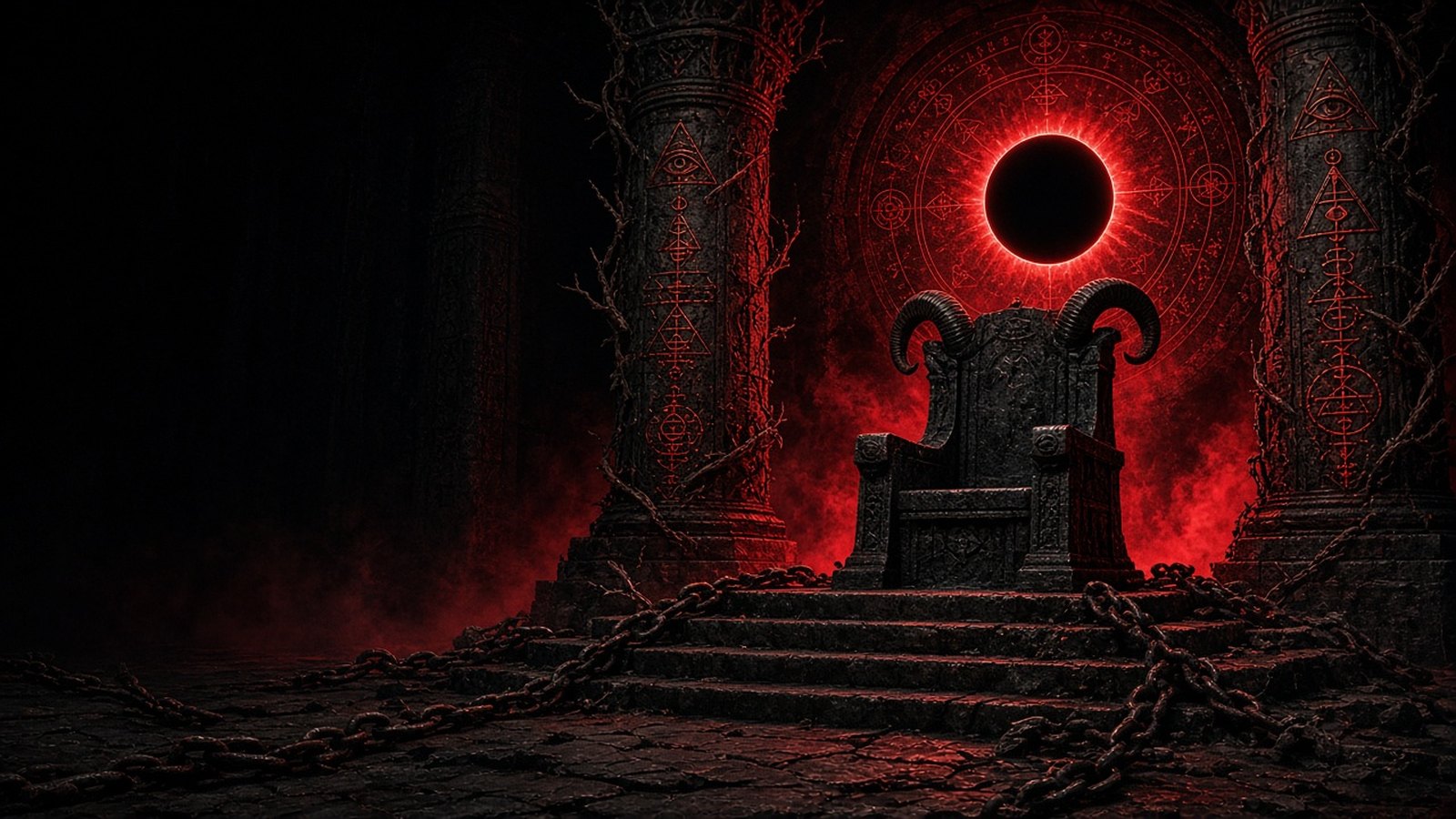
The figure at the Crossroads does not remain at the Crossroads. By the second card, he has entered the ordinary hours. The Devil follows bondage past the moment of encounter and into the life arranged around it: the relief that becomes a requirement, the pattern that acquires a voice, the shame that begins to govern what can be said and who can come near.
After Nine of Swords turns the journey towards the besieged mind, this album asks what controls that mind. Addiction, dependency, temptation and obsession are not treated as separate masks for an unrelated monster. They belong to the darker self already met at the beginning. The return is a deepening, not a replay. The person can recognise the figure more clearly without yet being able to stand beyond his reach.
That distance between recognition and release makes the record distinct. Naming the pattern does not remove it. Continuing to breathe does not prove freedom. A public collapse is not required for an interior life to fall apart. Across thirteen tracks, the binding grows familiar enough to become difficult to distinguish from the person who carries it. The song titles trace the pressure, but the album refuses to turn awareness into a victory speech that the chapter has not earned.
The Binding begins with the cost of comfort not yet understood. Reckless Fade and Fading Protocol let damage accumulate through repetition: one through impulsive choices, the other through the mechanical disappearance of connection and presence. Hollow Vessel brings the outward body and the inward absence into the same frame. The person still appears. Something essential has become harder to find.
Elsewhere, the distance between hurt and identity collapses. I Am the Wound lets the injury threaten to become the whole name. The Tower Falls Inward holds a collapse that need not be visible from outside. The Moon's Lie finds nighttime certainty rewriting what daylight might have questioned. The record gives those states a language without treating their darkest conclusions as instructions or truth. Its testimony belongs to the person caught inside them.
There is no victorious exit at the end of this chamber. Nothing Left to Bury II closes on recognition rather than escape. The pattern remains close enough to inhabit the voice that recognises it. That unresolved ending is part of the larger architecture. The next card, The Lovers, does not introduce an untouched person who has left every chain behind. It brings unresolved wounds towards connection, where dependency and the need to be chosen can take another form.
The Temple remains ahead, unfinished. This album shows why its walls cannot be built honestly from denial. Before a door can be left open, the builder has to learn what has been living inside.
Full tracks
The Binding
Meaning
The Binding begins before the price of relief is fully understood. Comfort becomes a lock by degrees, close enough to something needed that its narrowing edges are difficult to recognise. The song opens The Devil not with a stranger arriving from nowhere, but with a change in the meaning of something already allowed near. What once seemed to loosen the weight begins to decide how the weight will be carried.
This is the second Tarot chamber's first movement: bondage entering daily life. The Crossroads figure has not vanished just because the journey has moved beyond the road. His familiarity is part of the danger. The track keeps the moment of binding intimate, refusing to confuse the feeling of being briefly held with the freedom to move. The lock has a history, and that history begins before it is named.
Fading Protocol
Meaning
In Fading Protocol, disappearance becomes routine. Shame organises the ordinary movements until connection and presence begin to feel mechanically erased. The title's coldness matters within the album: what hurts has ceased to look like an interruption. It has acquired a procedure, a way of repeating itself that can make the loss difficult to recognise while it is happening.
The track belongs beside Reckless Fade without simply repeating it. One exposes the wear of impulsive choices; this one follows the pattern as it becomes an everyday arrangement. In both, the person is diminished by recurrence rather than removed in a single scene. The wider Temple is built from decisions too, but this chamber shows the darker construction: repetition can make a prison feel ordinary. The song gives that ordinary damage a name before the story can begin to ask what might be done differently.
The Tower Falls Inward
Meaning
The Tower Falls Inward keeps collapse inside the person rather than arranging it as a public spectacle. Nothing in its meaning requires the world to stop and witness what has fallen. The inward direction is the wound in the title: a structure can give way where nobody else can see the debris, leaving the outward day able to continue.
In The Devil, this follows the shrinking distance between hurt and identity. What seemed to hold the person together can become part of the collapse itself. The track belongs to LOSTAT66's architectural language without announcing a literal ruined building or a completed revelation. Its room is psychological. Its consequence is the difficulty of being understood when the damage does not produce an obvious scene. The listener remains inside that pressure, where falling apart and continuing to appear can occupy the same moment.
Still Breathing
Meaning
Breath continues. Still Breathing refuses to turn that fact into a claim of freedom. The song stays with physical survival while the pattern remains, making room for the difficult difference between being alive and feeling released from what has been controlling the life. Its title can be heard as persistence without being mistaken for a victory already won.
That distinction matters throughout LOSTAT66. Later chapters will let being here carry a different weight, but The Devil has not arrived at that distance yet. In this chamber, continued breath does not end dependency, shame or the sense of absence. The track protects the honesty of the journey by refusing to borrow hope from a later room and place it where the narrator cannot yet feel it. Survival is present. The work of understanding what survival might become is still ahead of the voice speaking here.
Meaning
The Binding
The Binding begins before the price of relief is fully understood. Comfort becomes a lock by degrees, close enough to something needed that its narrowing edges are difficult to recognise. The song opens The Devil not with a stranger arriving from nowhere, but with a change in the meaning of something already allowed near. What once seemed to loosen the weight begins to decide how the weight will be carried.
This is the second Tarot chamber's first movement: bondage entering daily life. The Crossroads figure has not vanished just because the journey has moved beyond the road. His familiarity is part of the danger. The track keeps the moment of binding intimate, refusing to confuse the feeling of being briefly held with the freedom to move. The lock has a history, and that history begins before it is named.
The Devil
Naming the presence does not drive it out. In The Devil, the pattern speaks through the narrator, closing the distance between the person and the thing understood to be controlling him. The figure is no longer safely placed beyond the threshold as an enemy who can be pointed towards. Recognition turns the voice inward. What has been repeated has learned how to sound like the self.
The title track deepens the Crossroads encounter rather than retelling it. This is not the moment of making the Oath. It is the life in which the darker self must be understood after the promise has already been made. Within the album, the song establishes the difficulty that every later track inherits: knowledge can expose the chain without loosening it. The name is spoken. The presence remains, and the chamber has not opened merely because it has been described.
No Guts
No Guts turns contempt inward. Its pressure comes from hesitation meeting a voice that treats hesitation as another reason to despise the person experiencing it. The song belongs to The Devil's account of control: not only what a pattern makes someone do, but how it teaches them to speak to themselves while they are caught inside it.
The cruelty of that voice is not a measure of the narrator's worth. Nor does the track turn the edge of despair into a heroic act. It stays with the shame and paralysis that can make every possible movement seem like evidence against the self. In the wider story, this is one of the ways the chain becomes difficult to see. Punishment sounds like honesty. The person is left arguing with a verdict that has already decided how to hear the answer.
Reckless Fade
The disappearance in Reckless Fade is cumulative. Repeated impulsive choices wear away the life around them without requiring one spectacular moment to explain the damage. The title holds that movement between recklessness and fading: actions can be forceful while the person acting becomes less and less able to recognise where they have arrived.
Within The Devil, the song refuses the simplicity of a single fall that could be isolated, named and left behind. Its erosion belongs to the pattern, to the recurrence that makes the next choice feel familiar even as the consequences gather. That is what gives it a place in the continuous descent. The chamber is not built in one night. It grows through what is repeated. The track lets the listener remain with that uncomfortable scale, where small acts can carry a weight their moment does not reveal.
Hollow Vessel
The body remains in view while personality empties in Hollow Vessel. Dependency has not removed the outward shape, which is part of what makes the absence difficult to explain. A person can still occupy the room and still become increasingly distant from the life that room appears to contain. Presence and participation have ceased to mean the same thing.
This track gives The Devil's bondage a particular form: not an added monster, but a diminishing self. The vessel is there. What it carries has been altered by the pattern filling it. Within LOSTAT66's wider language of chambers and bodies, the image draws towards the fear that survival can continue after feeling has withdrawn. It is not a declaration that the person is truly empty. It is testimony from inside an emptiness that has begun to sound like an identity.
The Moon's Lie
Night becomes an unreliable storyteller in The Moon's Lie. The lyric watches familiar rooms shift and trusted faces become difficult to read, while the darkness rewrites failure into something unbearable. The chorus gives that voice its name. It tells the narrator he is finished, tells him to run, and returns close enough to belief that knowing it is false does not settle the argument.
The song's force lies in that repeated almost. Resistance exists, but it has not silenced the story the night keeps telling. Within The Devil, this becomes a portrait of distorted certainty and obsession rather than a supernatural explanation for suffering. The track can recognise the trick and still feel its pull. Its later acoustic reflection in Welcome to Anhedonia returns to the same unstable room, where quieter surroundings do not automatically make the voice less convincing.
Suicide Watch
Suicide Watch occupies the tension between exposure and secrecy, between being watched and being able to reveal what is happening inside. Vigilance does not automatically dissolve isolation. The song gives the danger its seriousness without making it a spectacle or reducing the person at risk to the risk itself. Its weight belongs to the difficulty of remaining visible when shame keeps asking for concealment.
Within The Devil, that tension follows the chapter's deeper concern with control. A person can be physically present and still struggle to make their internal state known. Being seen from outside is not always the same as being understood. The track holds that distinction without claiming a diagnosis or supplying an invented personal event. It remains part of the descent's human testimony: the need for safety can exist alongside the fear of letting another person know how much safety is needed.
Fading Protocol
In Fading Protocol, disappearance becomes routine. Shame organises the ordinary movements until connection and presence begin to feel mechanically erased. The title's coldness matters within the album: what hurts has ceased to look like an interruption. It has acquired a procedure, a way of repeating itself that can make the loss difficult to recognise while it is happening.
The track belongs beside Reckless Fade without simply repeating it. One exposes the wear of impulsive choices; this one follows the pattern as it becomes an everyday arrangement. In both, the person is diminished by recurrence rather than removed in a single scene. The wider Temple is built from decisions too, but this chamber shows the darker construction: repetition can make a prison feel ordinary. The song gives that ordinary damage a name before the story can begin to ask what might be done differently.
I Am the Wound
The title leaves almost no distance between injury and identity. I Am the Wound stands at the point where having been hurt threatens to become the only available account of being a person. The wound is not merely remembered. It occupies the name, narrowing the self until every other part becomes harder to see through it.
Within The Devil, this is one of bondage's deepest forms. A pattern need not be experienced as something imposed from outside if it has become the way the person understands himself. The song holds that enclosure without asking the listener to accept it as the final truth. The wider journey will make room for the wound without granting it the whole life. Here, the separation has not yet been learned. The statement is severe because the voice can no longer easily imagine saying anything beyond it.
The Tower Falls Inward
The Tower Falls Inward keeps collapse inside the person rather than arranging it as a public spectacle. Nothing in its meaning requires the world to stop and witness what has fallen. The inward direction is the wound in the title: a structure can give way where nobody else can see the debris, leaving the outward day able to continue.
In The Devil, this follows the shrinking distance between hurt and identity. What seemed to hold the person together can become part of the collapse itself. The track belongs to LOSTAT66's architectural language without announcing a literal ruined building or a completed revelation. Its room is psychological. Its consequence is the difficulty of being understood when the damage does not produce an obvious scene. The listener remains inside that pressure, where falling apart and continuing to appear can occupy the same moment.
Still Breathing
Breath continues. Still Breathing refuses to turn that fact into a claim of freedom. The song stays with physical survival while the pattern remains, making room for the difficult difference between being alive and feeling released from what has been controlling the life. Its title can be heard as persistence without being mistaken for a victory already won.
That distinction matters throughout LOSTAT66. Later chapters will let being here carry a different weight, but The Devil has not arrived at that distance yet. In this chamber, continued breath does not end dependency, shame or the sense of absence. The track protects the honesty of the journey by refusing to borrow hope from a later room and place it where the narrator cannot yet feel it. Survival is present. The work of understanding what survival might become is still ahead of the voice speaking here.
Possession Complete
The argument grows quiet in Possession Complete, not because peace has arrived, but because dependency has filled the space where competing voices might once have remained. The chapter's control reaches towards the whole self. The title carries a frightening certainty, yet that certainty belongs to the enclosure the song is describing, not to a final verdict on the person inside it.
Placed near the end of The Devil, the track gathers the binding, the fading and the threatened disappearance of identity into one severe point. Recognition alone has not supplied an exit. A single voice seems to occupy what used to be conflict. The wider story will continue, but this room does not pretend to know that continuation as relief. Its silence is the absence of resistance, and the listener is asked to hear the difference between that absence and being able to rest.
Nothing Left to Bury II
The sequel returns to a title already heavy with disappearance, but Nothing Left to Bury II belongs to The Devil's later recognition of the pattern. The available lyric imagines the body, name, history and occupied spaces falling away, leaving no clean burial through which an ending could be made understandable. Erasure does not deliver the peace its completeness might seem to promise.
As the album's closing track, the song does not grant an escape the chamber has not earned. The pattern still inhabits the narrator. Recognition is present; release is not. That unfinished condition is what passes towards The Lovers, where attachment will confront the same unresolved self in another form. This is not the end of the person, nor a celebration of vanishing. It is the darkness of a chapter that cannot yet imagine leaving a trace without feeling that the trace belongs to its captivity.